The web design process: what you're approving at each stage

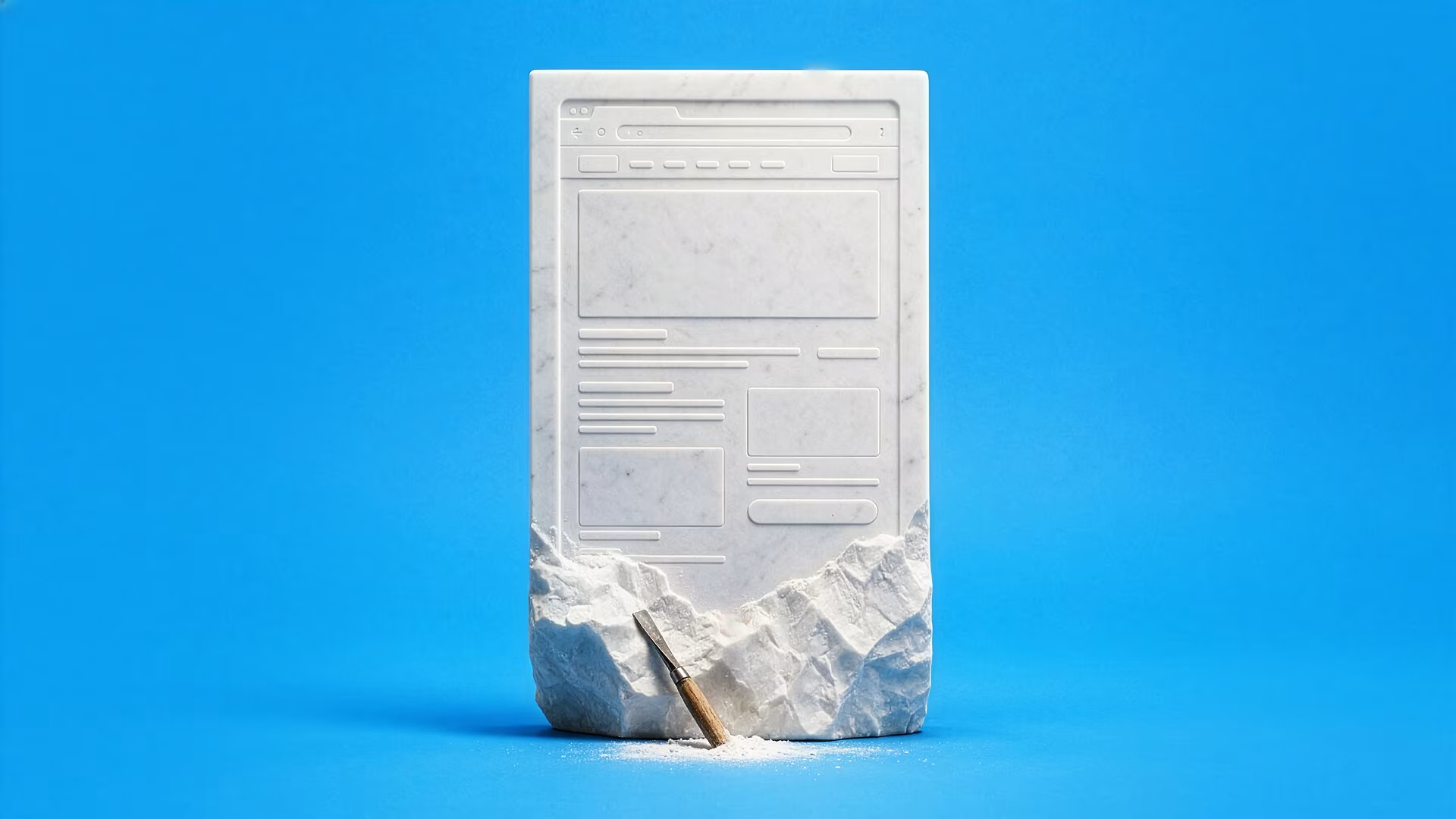
The web design process is usually explained from the agency's side, covering what they build and in what order. This piece walks through the same stages from your seat at the table instead, covering what you'll be asked to approve and what it costs to change your mind once you have.
By the end, you'll know exactly what to expect at every stage, so nothing about your timeline or budget catches you off guard.
The web design process at a glance
The design process runs in eight stages. Below is a high-level view of what happens and what you will be asked to review at each step.
The stages that run over are the content-dependent ones: strategy, design, and build. All three wait on the decisions from your side.
Stage 1: Discovery (1-2 weeks)
Discovery is where the agency learns what it's building, and who it's for: your goals, your audience, your competitors, and where your current site is falling short.
Some agencies won't start designing until it's clear what you offer, who it's for, and why someone should choose you. It feels like a delay, but it protects your budget.
Get these ready before kickoff and you save a week:
- Analytics access: So they can see how the current site performs instead of guessing
- Brand files: Logo, fonts, colours, whatever exists
- Existing content: Pages, documents, anything already written
- Access to whoever actually knows the business: Often someone other than the person managing the project
Then the question most projects skip: who holds approval rights? Decide that now, well before the design review. If a decision-maker joins in week seven, they can reopen decisions the team has already made, which can lead to major delays.
The agency should understand your goals, audience, and what the site needs to do well enough to move forward. If something feels wrong or missing, this is the cheapest point to correct it.
Stage 2: Sitemap and content strategy (1 week)
A sitemap is the list of pages and how they connect. It sets what gets designed, written, and built, so changing it later ripples through all three at once.
Reviewing a sitemap is hard when you can't picture the site yet. Make sure every page has a job, and make sure you can name who each one is for.
Content and keyword research belong here too, while the sitemap is still open. Keyword research can help shape which pages you need and what each page should cover. This is much easier to change now than after the site has been designed and built.
If your team is supplying the copy, that means finished, publish-ready content, not a document of bullet points. Aim to have it mostly ready before wireframes so the layouts can be designed around real content rather than placeholder text. If your team can't write it, decide early who will.
At this stage, you're approving more than a list of pages. You're confirming that every page has a clear purpose, that the structure makes sense, and that you know who is responsible for writing the content.
Stage 3: Wireframes (1-2 weeks)
A wireframe is a bare layout: boxes, headings, no colour or final images. It keeps structural feedback separate from visual feedback, so you can make useful decisions about both.
Skipping wireframes to move faster just shifts the argument to a later, costlier stage. The structural questions don't disappear; they resurface after the design is built, when changing them is expensive.
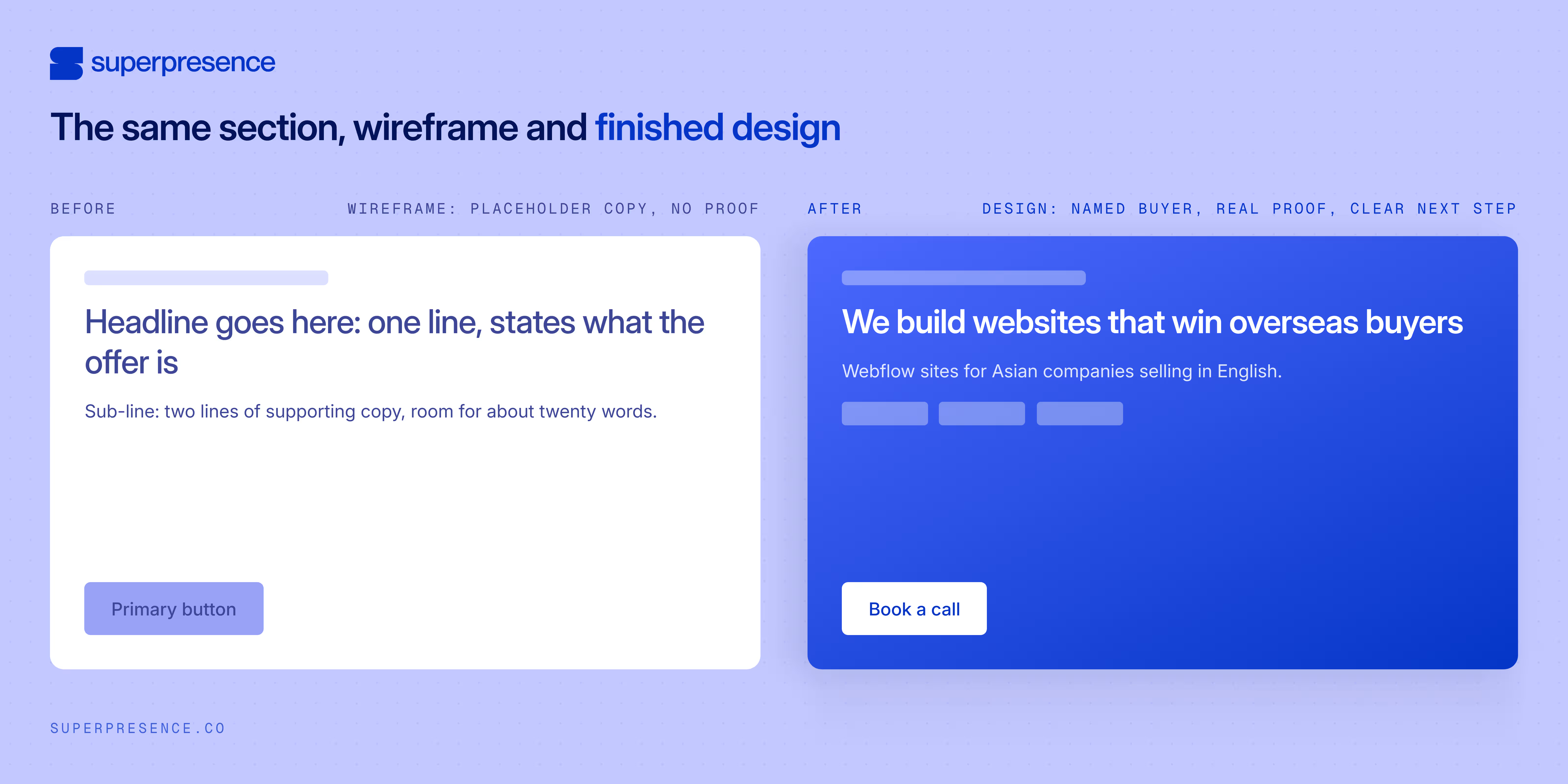
Now there are a few ways you can review a wireframe:
- Look at: Page order, what sits above the fold (the part of the page visible before someone scrolls), hierarchy, what each page is for, and whether your real content fits
- Ignore: Fonts, colours, images, and placeholder text
A common mistake is approving a layout before checking whether it works with the actual content. A page designed for 300 words won't suddenly work when you add 900. Make sure the structure works with your real content before moving into visual design.
Stage 4: Design and revisions (2-3 weeks)
This is where the site starts to feel real where wireframes turn into a polished experience using your brand’s colours, typography, photography, and visual style. This is also where a web design agency focuses on bringing the approved structure into a finished visual experience.
Changes also become more expensive at this stage, especially later in the revision process when more of the design is already in place.
The fix is boring but it works: one voice, one document, conflicts resolved inside your team before they reach the agency.
Now there's a scenario worth preparing for: what happens if you just don't like the design? Not liking the first one is normal and recoverable. Make sure to give feedback the designer can act on, like changing the CTA colour or the homepage copy, not something vague like wanting the site to pop.
Once you approve the design, structural changes get expensive. Text and colour tweaks stay easy, but layout changes mean going back to the wireframes. Get clear on whether the design achieves your goals before you sign off, not just whether you like it.
Stage 5: Build the website (2-4 weeks)
During the build phase, developers turn the approved designs into a working website. They set up the CMS (the area where you’ll manage your content) and connect any third-party tools.
You should usually get a weekly written update and a staging link (a private version of the site you can review), rather than having daily calls.
This is where the visual designs become an interactive website. Changes become more expensive at this point because developers may need to rebuild parts of the code.
Tools like Webflow and Framer are changing this process by letting teams design directly in the website itself, reducing the gap between design and development.
However, two issues can still delay the project at this stage:
- Missing content: Missing copy is one of the main reasons projects get stuck. A finished design cannot launch without the content, so the site may sit on staging while your team finishes it
- Late integrations: Decide early which tools you need, such as a CRM, booking system, payment gateway, or analytics platform. Adding one during testing can mean extra development work, a change in scope, and a new cost
The result is that small delays during the build can quickly become launch delays, especially when they require developers to stop building and go back to fix what was missed earlier.
At this point, you're checking that the finished content is ready and that the staging site reflects what you already signed off. The pages should work as expected, the interactions should match the design, and anything that doesn't should be caught before testing rather than after launch.
Stage 6: Testing (1 week)
Testing covers a long list on the agency's side: devices, browsers, forms, tracking, speed, accessibility, broken links, and redirect mapping if this is a web redesign. Redirects point old page addresses to new ones, so visitors and Google don't hit dead ends.
Thorough testing ensures your website functions perfectly for every single visitor, no matter how they access it.
The goal isn't just to confirm that the site looks right. You're checking that the finished site works for the tasks your customers actually need to complete, whether they're browsing on a phone, filling in a form, or moving between pages.
Stage 7: Launch and search rankings
Launch involves DNS and propagation, SSL, redirects, and Search Console setup. The one thing you need ready is domain registrar access. Run this pre-launch checklist before go-live:
- Redirects mapped from old pages to new
- Analytics live and recording
- Search Console verified
- Metadata set on every page
- Legal pages published
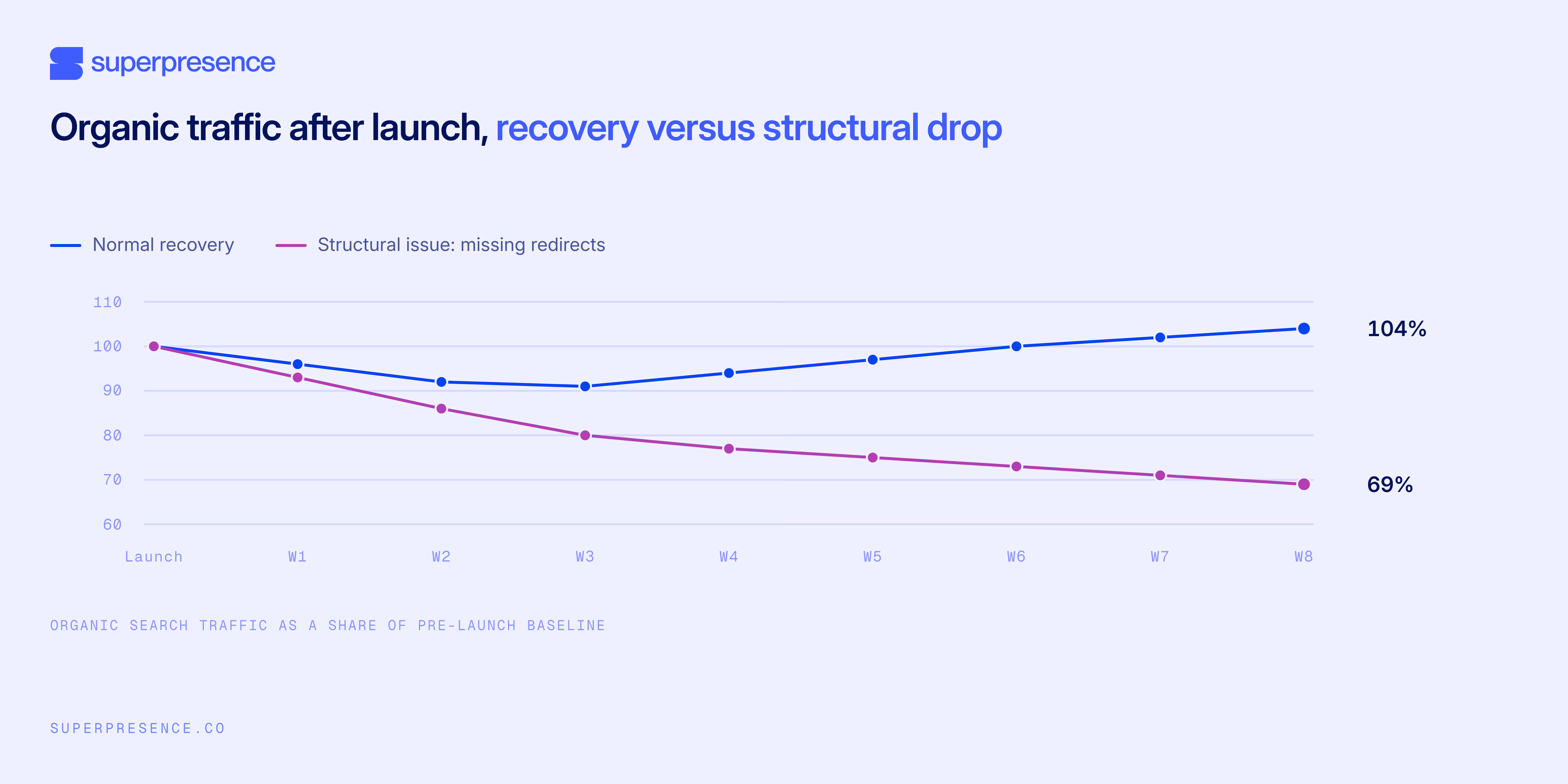
Search visibility can fluctuate after launch while Google processes the new site. A small short-term dip isn't necessarily a problem, but a sharp or sustained drop should be investigated rather than assumed to be normal.
Here's an example of what post-launch recovery can look like. In this case, organic traffic dipped after launch but started to recover over the following weeks. The page that lost visibility continued to decline, which would warrant further investigation.
Launch is the final approval point. You're confirming that the site is ready to go live and that the essential checks are complete. Once those are confirmed, there should be no surprises left between the staging site and the live one.
Stage 8: Post-launch (ongoing)
Handover is the part buyers forget to ask about until it's too late. You should walk away able to change a headline without opening a support ticket.
A real handover package contains six things:
- Project and account access: Every login and connected account, in your name
- Final brand files: The assets, source included
- The strategy document: A summary of the project goals to guide your future updates
- The design source file: The editable original, with exports included
- A recorded walkthrough: How to run the site, so training doesn't rely on memory
- A measurement plan: A guide on what analytics to track to measure success
Before the project closes, agree on the ongoing support arrangements (a warranty period or maintenance retainer). This is so you know who to call if you ever want to add complex new features.
Final thoughts
A successful web design process is a true partnership. By gathering your content early, appointing a single decision-maker, and providing clear, goal-oriented feedback, you ensure the process stays on schedule and achieves your vision.
If you want to understand how your current website is performing before starting a redesign, you can request a website review. We’ll help you identify exactly what is working, what needs improvement, and what the best next steps are for your business.
FAQs
What are the steps in the web design process?
There are eight stages: discovery, sitemap and content strategy, wireframes, visual design, development (build), testing, launch, and post-launch handover. The first half focuses on planning and visuals, while the second half focuses on coding and testing.
How long does it take to design a website?
A simple 5-10 page website generally takes 4-6 weeks. A standard business website takes 6-12 weeks, with eight weeks being the most common timeline. The biggest factor in meeting these timelines is how quickly content and feedback are provided.
What do I need to provide to a web design agency?
Analytics access, brand files, near-final content for your key pages, one named decision-maker, and a list of every integration you'll need. Content is the item that stalls projects most, so treat it as a scheduled deliverable with an owner and a date. That short list is the website design process handled from the client side.
How many design revisions should I expect?
Two to three rounds per phase is the industry norm, where a round means one consolidated batch of feedback followed by implementation and review. Ask what counts as a single round before you sign.
Who writes the content for my website?
Either you supply it or you pay the agency to write it, and both models work. What doesn't work is assuming the other party is handling it. That assumption is the single most common cause of a stalled project, so settle it in writing at the strategy stage.
Will my rankings drop after a redesign?
A 5-10% dip for a few weeks is normal and usually recovers within 4-8 weeks if redirects and technical basics hold. A 20%+ drop lasting past a month means something broke, most often missing redirects. The launch section above covers what to check.

![Portrait of a Kevin D Chen [Dark]](https://cdn.prod.website-files.com/6963b46b73d13c416619d604/696770db31b454394fd4709a_43e4f0a4b187c1f51dd5024dd9980a60_kevin-photo.avif)