- Hidden pricing in a website rarely protects profit. It reads as "too expensive to ask," so good-fit buyers opt out before they ever make contact.
- A starting price or average number does most of the work. "Starting from X" filters out buyers with a mismatched budget and makes sales calls more efficient.
- A few deal types have a real reason to hide the price, like custom enterprise deals. Even then, you need to explain what moves the price instead of leaving a blank "full price on application."
Most service sites (accounting firms, tax advisories, professional services firms) we audit hide their pricing. The reason founders give is always the same: the work is custom, so no two projects cost the same.
This isn't about publishing a full rate list. It's about giving visitors one clear number to measure themselves against, so the right buyers stick around and the wrong ones move on before they ever pick up the phone.
The real reason most business owners hide their prices
The real reason most business owners have for hiding prices is simpler than "custom work”: the price feels high, and showing it feels like a risk that businesses worry about. But the visitor doesn't see the worry, just the silence that reads as a warning sign.
The custom-work excuse doesn't hold up either since a number is not a quote. A business can show a starting price or a normal range without promising an exact price for work it hasn't scoped.
Here's what else happens when the price is missing. Visitors guess and think the business is too expensive, or that the real price only comes out after a sales call. Either way, trust drops before the first conversation even starts.
How hiding prices from your site affects your business
Hidden prices push the price conversation to the worst possible moment: a sales call with someone who was never in budget.
A contact form with no hint on price raises abandonment on its own, since nobody wants to book a call just to find out whether they're in range. The leads who do come through skew wrong too, pulling in people who assume you might be cheap, while your team burns hours disqualifying them.
Adding a price, or even just an indication, might see your total enquiries drop. But the close rate on the leads that do come in tends to climb. This means you and your team spend less time chasing leads that were never going to close in the first place.
That trade-off is worth taking seriously. Buyers who go looking for a price tend to be close to making a decision, not just idly browsing. Make them dig for the number, and the business loses the ones who were nearly ready to buy.
Should you show prices at all?
Sometimes keeping exact prices off the page is the right call. The real exceptions are narrow:
- Custom enterprise scope: Every deal is scoped from scratch and the range is genuinely enormous
- Channel conflict: You sell through distributors or partners, and a public price undercuts them
- Confidentiality-heavy work: The engagement is sensitive enough that pricing lives in conversation
Here's the test: is the price hidden for one of those three reasons, or because it just feels risky to publish? But even a genuine exception doesn't mean going silent.
Take channel conflict for example: if a distributor owns pricing on certain items, mark them "available via partner" and keep everything else on the site clear. A blank "price on application," with no explanation at all, reads as evasive to exactly the buyer worth winning.
Give buyers a number to anchor on
For custom work, skip the rigid price list because it can backfire anyway. Give enough signal for the right buyer to place themselves. A good price signal has four parts, in order:
- An anchor number: A "starting from" figure or a typical average, so a visitor can qualify themselves in seconds
- What's included: The scope that number buys, in plain terms
- What moves it: The factors that push the price up or down, like scope, timeline, or integrations
- Who it's for: A line on the buyer each tier suits, so people slot themselves into the right one
How you frame the anchor is a real decision. A low "starting at" figure, pulls everyone to the floor, and then every real quote feels like a letdown. An "average client invests around $3,300" framing sets a more honest expectation.
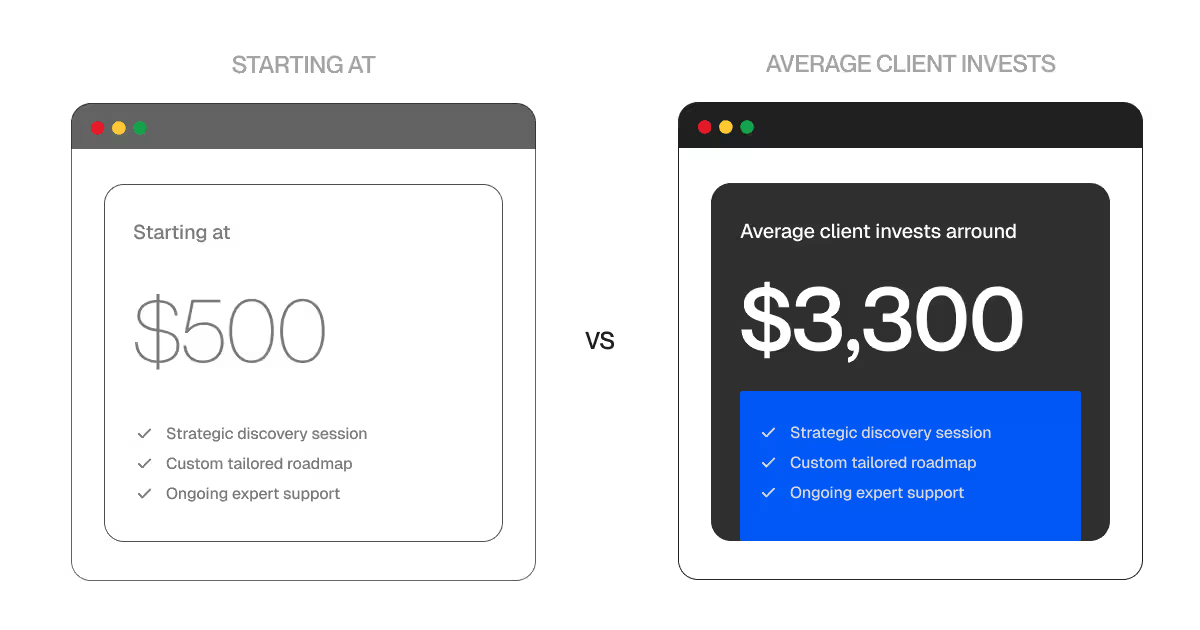
Put the signal where high-intent visitors look: a dedicated pricing page, linked clearly from your services pages.
Honest pricing also means naming the all-in cost. Let’s take a look at Bench as an example, a bookkeeping service used by small businesses across the US.
Its pricing page lists "starting at $199/mo" for its lighter plan, spells out exactly what's included, and lets a visitor choose before ever booking a call.

Caption: Bench pricing page
The same logic holds even when the work itself is custom. A starting figure or typical range, alongside what moves it, gives visitors the same anchor a fixed-tier product does. They just need the number, not a rigid price list.
Test it instead of guessing
A business doesn't have to bet the whole site on this. Run a period with a price signal, a period without, and compare conversion. The business's own numbers settle the argument faster than any blog post.
The method is simple: track visitors and enquiries across each period, then work out the conversion rate. A web design services provider can set this up as a straightforward test without touching the rest of the site.
But don't stop at volume. Track qualified leads and close rate too, since volume can fall while the quality of who comes through rises, and that's usually the result worth having.
There's a newer reason to act now. AI search increasingly pulls price ranges from sites that talk openly about cost, so a clear pricing page is becoming an asset for discoverability and conversion.
Final thoughts
A hidden price costs a business the good-fit buyers who guess too high and leave without a word. The buyers worth having will place themselves the moment they have a number to anchor on, and they'll respect the business more for giving it to them.
Not sure what your site is signaling about price? A quick website review from our team will show exactly where pricing is costing leads.
FAQs
If I start showing prices, will my enquiry volume drop?
Often yes, and that's usually fine. Volume tends to fall while lead quality and close rate rise, because visitors put off by the price rule themselves out before they ever contact you. The net effect on sales efficiency is normally positive, which is what you actually care about.
Every project is custom, so how do I show pricing without boxing myself in?
Give a starting price or average plus the factors that move it, not a fixed quote. A line like "most clients invest around X, depending on scope and timeline" sets expectations while leaving you room to scope properly.
Won't competitors use my prices against me?
A range plus what drives it doesn't hand competitors anything they can undercut, since there's no line-item to beat. The buyers comparing purely on price were never going to be your clients.
From Sydney, Australia with a decade in Asia, Kevin built his expertise driving product and growth at tech startups across fintech, logistics, consumer apps, and crypto. He founded SuperPresence with this expertise and passion, helping businesses create high-converting web experiences and digital growth strategies that drive real revenue impact.
Stay ahead of the curve! Subscribe now for expert insights
Hear directly from clients about their journey with Superpresence— our collaboration, expertise, and the results achieved.