Web design vs web development: what you're actually paying for

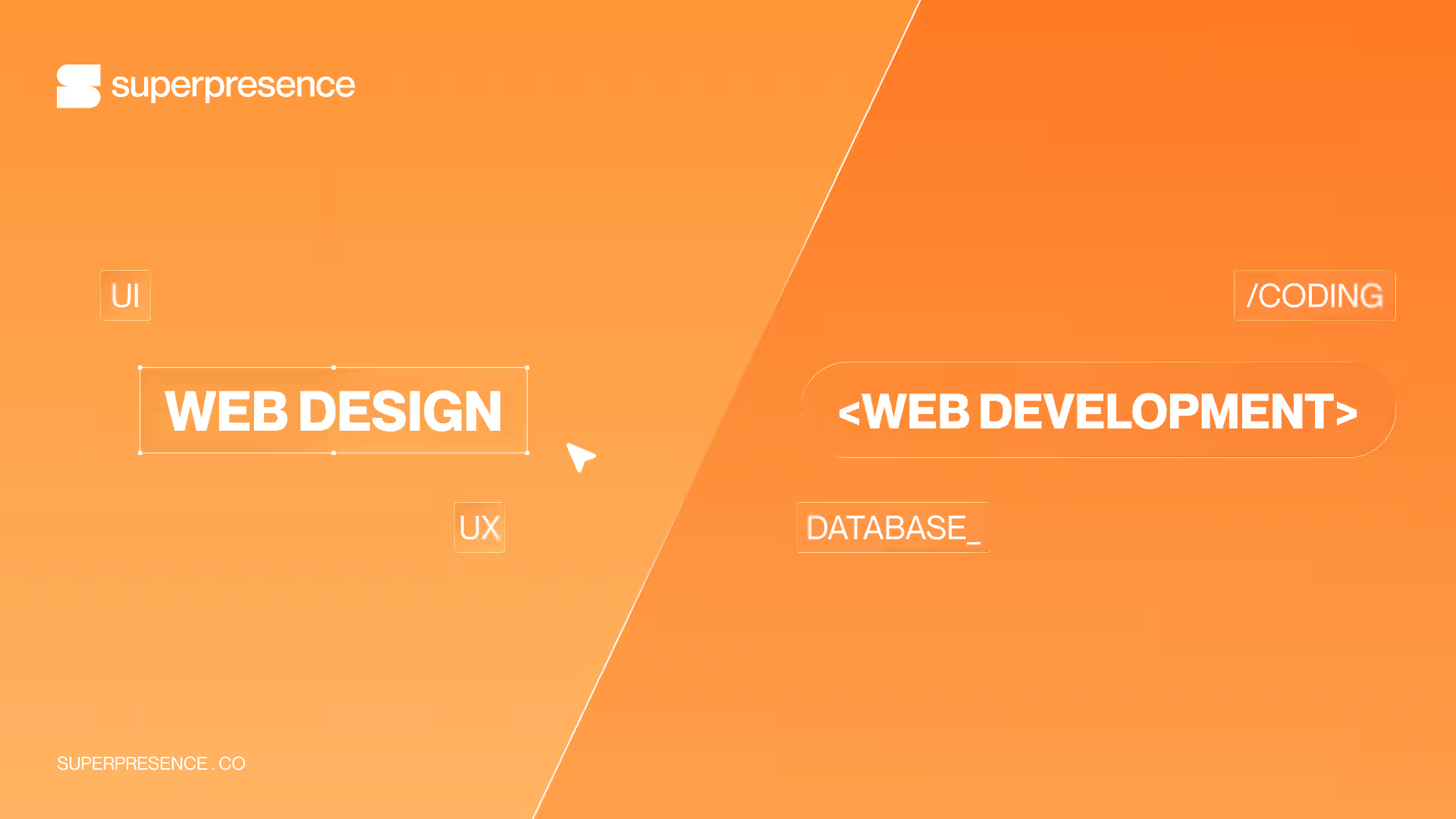
The web design vs web development divide sounds simple. Design decides what your site looks like and how it feels to use. Development is the code underneath that makes it actually work: the data, the logins, the parts a visitor never sees.
But if you're signing for a website rather than sitting an exam, those two labels are the wrong thing to decide by. What decides your budget and your result is scope, and scope starts with knowing what each role actually owns.
What a web designer actually does
A web designer owns what visitors see and how they move through the site: structure, hierarchy, layout, visual system, and interaction states. That output is the argument the page makes, encoded as a design. In a conventional workflow, the designer stops at handing over files.
What design work involves
Design starts well before anyone opens a layout tool. A designer researches the audience, sets the information architecture, sketches wireframes, then builds the high-fidelity visual design, the interaction states, and the responsive behaviour across screens. Most of that thinking happens before a single line of code exists.
Where the designer's job ends
At the handoff, a developer expects to receive a defined set of assets:
- Figma files: The layouts, components, and screens at production fidelity
- A style guide: Typography, colour, spacing, and the design system rules
- Interaction specs: How things move, hover, and respond on each breakpoint
That handoff point is where the traditional split lives, but it's also where the split starts to fall apart.
What a web developer actually does
A web developer turns a design into something that runs. That means the front-end a visitor touches and the back-end they never see: databases, logins, APIs, performance, security, deployment.
Front-end, back-end, full-stack in plain terms
These three terms get used interchangeably, but they have different meanings.
- Front-end: The visible layer a visitor clicks and reads, built from the design
- Back-end: The logic and data behind it, meaning servers, databases, and the parts that store and move information
- Full-stack: One person working across both
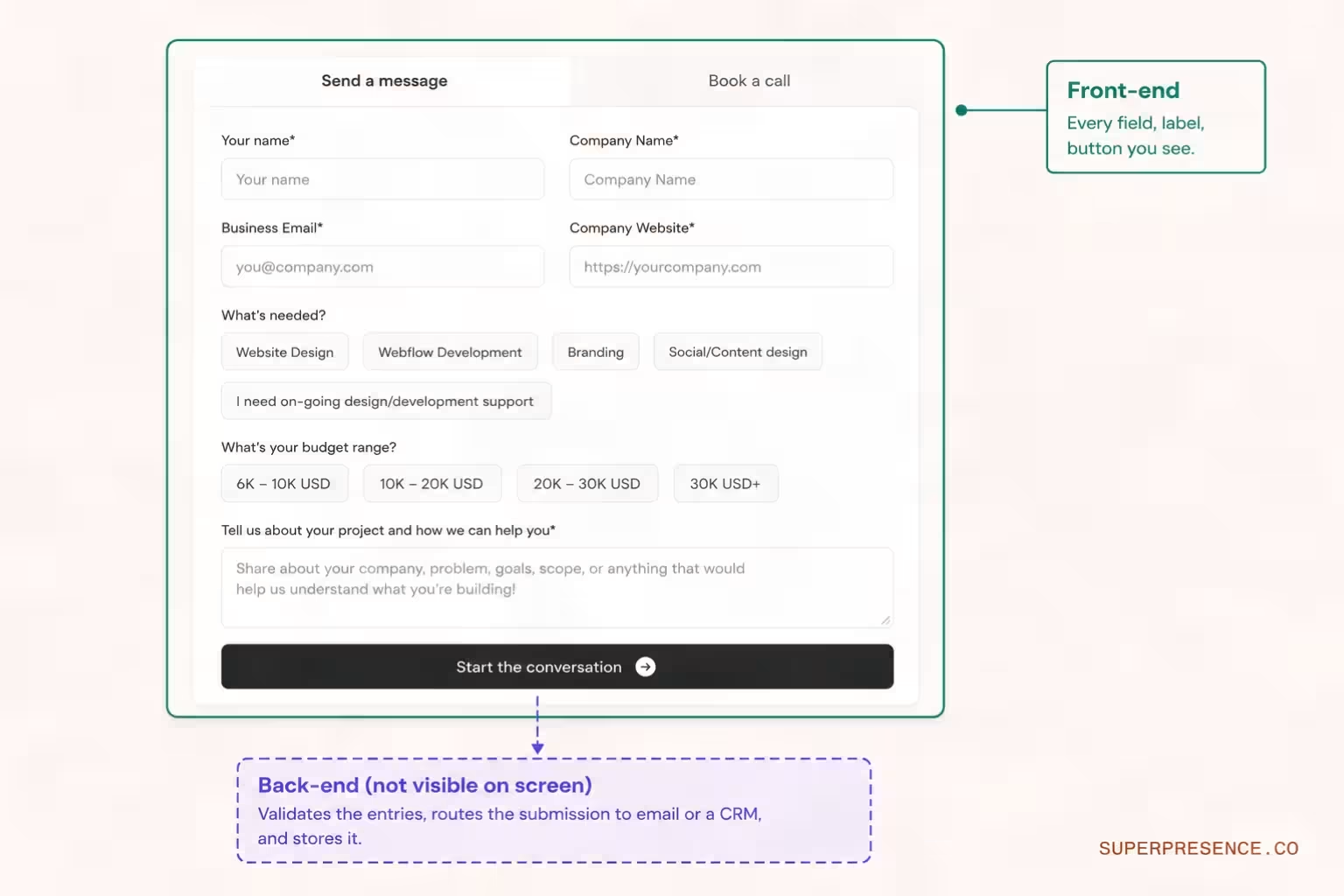
Take a contact form as an example. The fields, the layout, and the submit button are the front-end. Where the message actually goes once someone hits submit is the back-end.
What development covers that design never touches
Some of the machinery sits where a design can never reach it: user accounts and authentication, real integrations with a CRM or payment system, performance engineering, deployment pipelines, and security.
This is genuinely skilled work, and none of it is optional when a project needs it. The real question is timing: when does a project actually need it?
Web design vs web development: a workflow, not a rule
For a long time, the default workflow was the same: a designer made the site mockup, then a developer rebuilt it from scratch in code. That rebuild is the handoff tax with weeks of translation that add no conversion or UX thinking, and often drop the harder interactions as "out of scope."
Visual development collapsed the two steps into one. That's why a Webflow development can start around $4,000, while a custom-coded equivalent starts nearer $25,000 and climbs past $100,000. The gap comes down to what changed in how the site actually gets built.
Visual development changed the sequence
Visual development platforms like Webflow and Framer let a designer build directly in the production environment. The design and the code become the same motion. There's no separate rebuild and no translation loss weeks into development.
For a marketing site, that removes the handoff entirely, which is exactly why the pricing splits the way it does.
A concession, against my own interest: visual development isn’t a free pass. A designer-led build without solid CSS and performance discipline can ship bloated, hard-to-maintain code that eventually needs a real developer to refactor. The tool removes the handoff, but the engineering judgement still has to come from somewhere.
Which role does your project actually need?
Pick by what the site has to do, not by who's available. Here's how to tell which one your project needs.
- A marketing site: A designer-led build. Hire a developer first and you tend to get a site nobody on the marketing team can update, or a polished page with no conversion hierarchy or SEO structure
- A web application: Development is the primary project, and design is attached to it. Try to "design first" without technical scope and you buy expensive rework later
- A redesign: A design job, a rebuild, or both, decided by whether the real problem is how it looks and converts or how it's built and maintained
Some marketing sites really do need real back-end work: pricing engines, real-time dashboards, deep CRM integrations, genuine scale, compliance.
When those are in scope, the design-and-development split is two disciplines both earning their line. As a web design agency, Superpresence covers the design-and-build motion and partners for real back-end scope when a project crosses that line.
Use this as a quick web design vs web development reference:
Every figure above traces to the pricing benchmarks in this piece. Verify the bands against live sources before you sign, since practitioner pricing dates within months.
Final thoughts
Web design vs web development is about workflow. So decide by scope instead: for a marketing site, buy someone who can design a page that sells and ship it somewhere your team can edit. Add real development only where data, accounts, or integrations actually live.
You're paying for outcomes and for who can maintain them. The weeks one vendor spends rebuilding another vendor's file are pure cost.
Want to know which side of that line your own site sits on? The quickest way is to have someone look at it with a buyer's eyes. Request a website review and we'll show you what a cautious buyer sees on your site.
FAQs
What's the difference between web design and web development?
Web design is what visitors see and experience: structure, layout, visual system, and interaction. Web development is the code that makes it run: data, logins, integrations, performance, and security.
Do I need a web designer or a web developer?
A marketing site calls for a designer-led build. A web application is developer-led, with design attached. A redesign depends on what's actually broken. Pick by scope and project type, and the right role usually names itself.
Can one person do both?
For most marketing sites, yes. Visual development lets one person design and ship the same build. Beyond a defined point, no: once you need custom back-end, authentication, or real integrations, that's a second, genuinely engineering role.
Do you still need a developer if you build in Webflow or Framer?
For a standard marketing site, usually not. Visual tools produce production code, so one designer can build and ship it. But a build made without CSS and performance discipline can go bloated and eventually need a developer to refactor, and app-like features still need real engineering.


![Portrait of a Kevin D Chen [Dark]](https://cdn.prod.website-files.com/6963b46b73d13c416619d604/696770db31b454394fd4709a_43e4f0a4b187c1f51dd5024dd9980a60_kevin-photo.avif)