Why Webflow?
The platform behind every site we build, and the reason we're opinionated about it
We get asked regularly why Superpresence builds exclusively on Webflow. This page is the honest answer: what it does well, where it fits, and why it consistently outperforms the alternatives for B2B marketing websites.
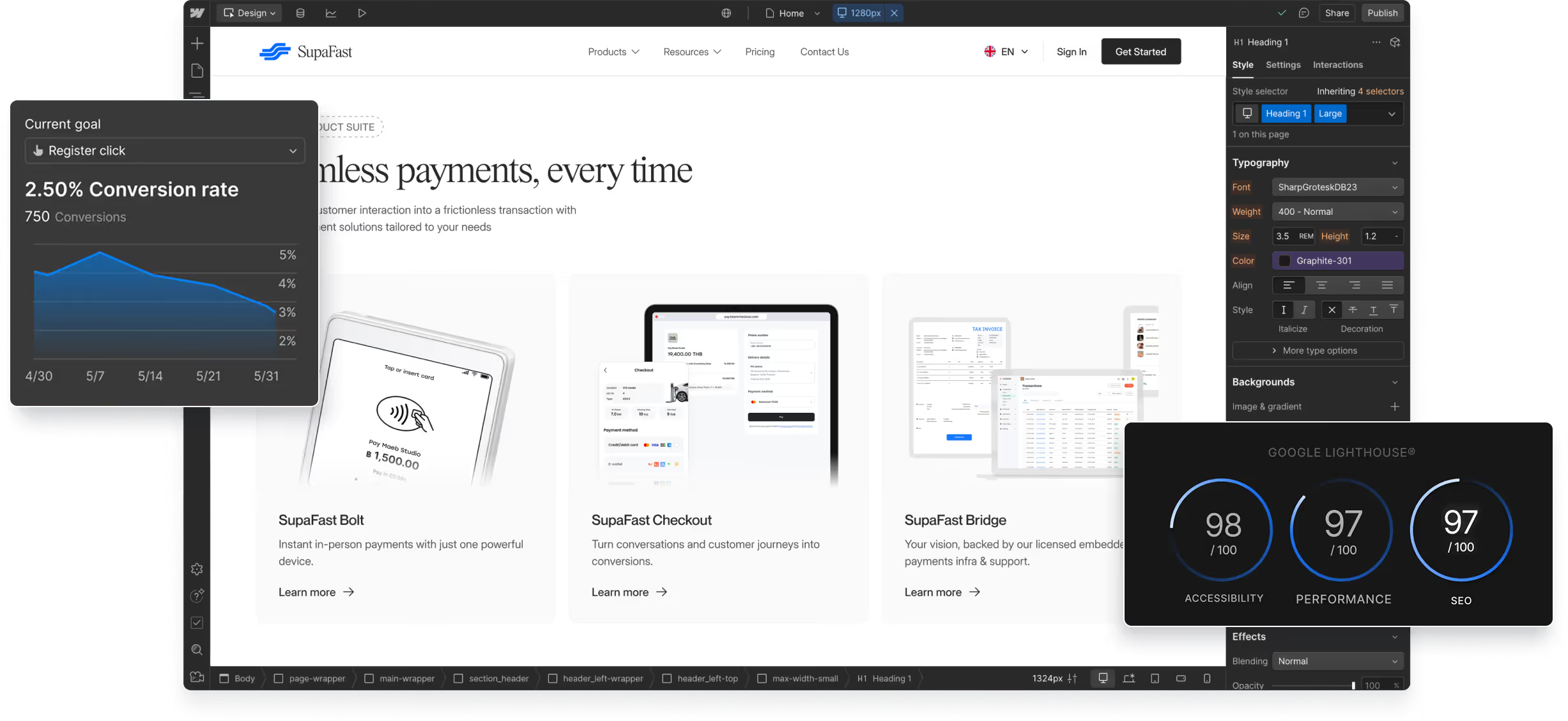
Trusted by growing B2B teams across APAC and beyond
.svg)

.svg)
.svg)
Before the Platform
Most businesses never actually
chose their website platform
Think about how your current website ended up on its platform. For most businesses, the answer is some version of: "The agency we hired used it," or "Someone on the team set it up years ago," or "It was the obvious option at the time."
That's not a decision. That's a default. And defaults have consequences.
It shapes what your team can do
Your platform determines whether your marketing team can publish a landing page this week or whether they need to submit a request and wait. It's the difference between your website keeping pace with your business and constantly lagging behind it.
It determines what you keep paying for
Some platforms need plugins, developer retainers, and security monitoring just to stay functional. Others include that by default. The platform you're on decides whether your ongoing costs are maintenance or growth.
It shapes what your team can do
A website that's hard to update stops getting updated. Content goes stale, design falls behind, and within 18 months you're back where you started — planning another rebuild. The platform is why.
This is why we're deliberate about building on Webflow. Not because it's trendy.
Because it changes the answer to all three of these.
Because it changes the answer to all three of these.
///
A platform designed for how your
marketing team actually works
Complete design freedom
Your site starts in Figma, not a template library. Every layout, animation, and interaction is custom to your brand. No compromise.
A CMS that scales with you
Blogs, case studies, resource libraries, team pages. Webflow's CMS handles structured content natively. No plugins, no version conflicts.
Clean code, fast pages
Webflow outputs semantic HTML, CSS, and JS with no plugin bloat. Faster load times, stronger Core Web Vitals, and a site search engines can read properly.
Security without the maintenance window
Hosted on AWS with managed SSL, automatic updates, and DDoS protection. No plugin patches to monitor. The platform handles it.
///
How Webflow compares to the platforms you're probably evaluating
Every platform has trade-offs. Here's where each one sits.
Design flexibility
Content updates
Page speed
Security
SEO control
Ongoing cost
Time to launch
Webflow
Full visual control. Figma-to-site, no template limits.
Visual editor your team can use for layout and content.
Clean output. Strong Core Web Vitals out of the box.
Managed hosting on AWS. SSL, DDoS protection, auto-updates.
Built-in tools. Clean URLs, sitemaps, structured data.
Platform subscription. Minimal additional tooling.
6–10 weeks for a fully custom Superpresence build.
WordPress
Theme-dependent. Full custom requires a developer.
Backend access required. Layout changes need a developer.
Plugin-heavy sites score poorly. Ongoing optimisation needed.
Frequent plugin vulnerabilities. Manual patching required.
Strong with plugins (Yoast, etc). Setup required.
Hosting + plugins + developer retainer + security monitoring.
8–16 weeks for custom builds.
Wix
Squarespace
Template-constrained. Limited layout control.
Simple editor, but limited to template structure.
Decent. Limited performance tuning.
Managed by platform. Limited transparency.
Basic. Limited structured data and URL control.
Monthly subscription. Less cost, less capability.
2–4 weeks for template-based sites.
Custom Code
Unlimited, but every change is code.
Developer handles every update.
Fully controllable, depends on your dev team.
Your responsibility entirely.
Full control, but manual implementation.
Developer salaries or agency retainer. Highest ongoing cost.
12–24 weeks for fully custom builds.
///
You don't need a developer on staff to keep your site current
This is the concern we hear most. "What happens after launch if we don't have web professionals internally?"
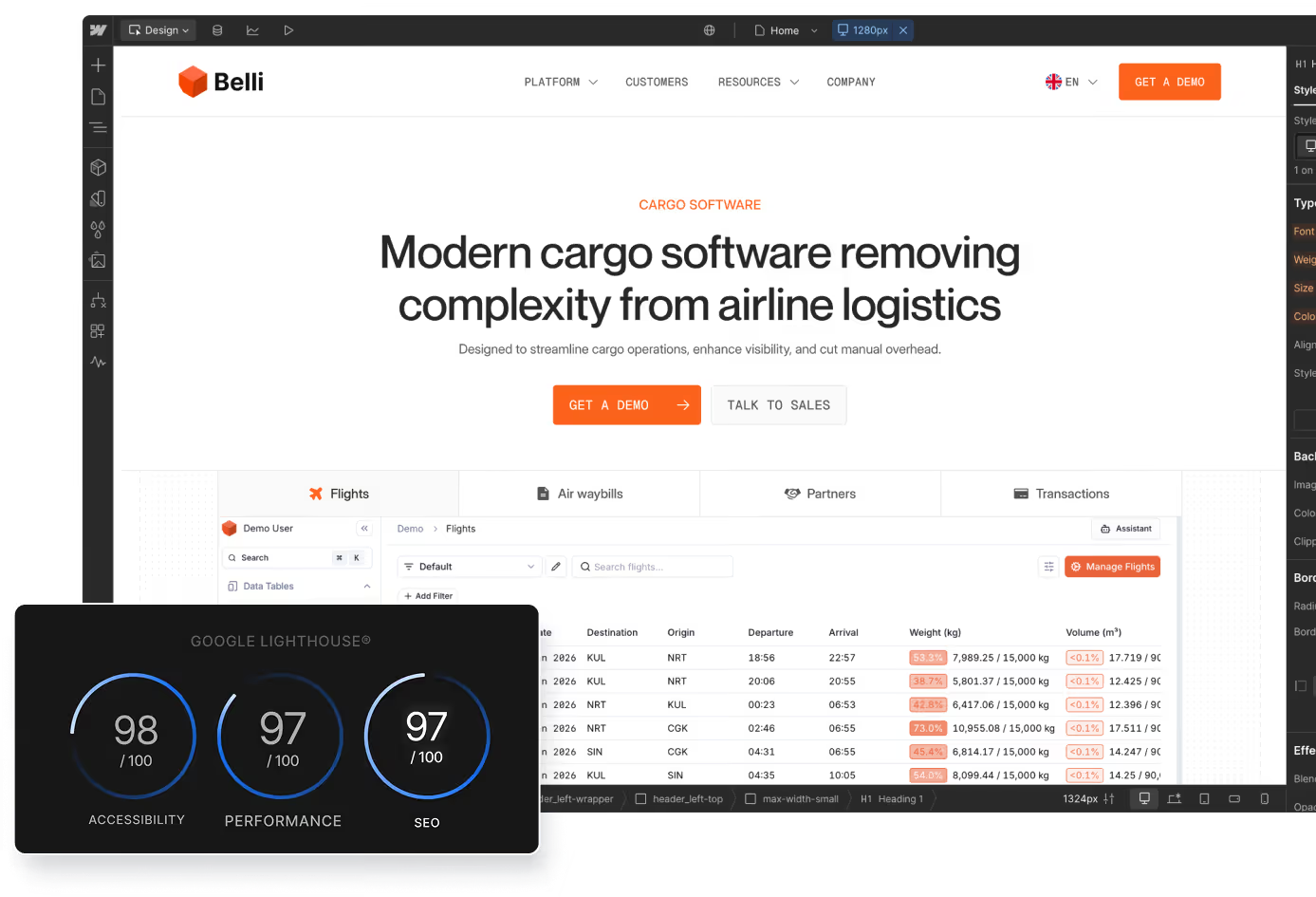
Webflow's editor is visual. Your marketing team can update headlines, publish posts, swap images, and adjust CTAs the same day. No staging environment. No deployment queue.
For structural changes, Superpresence offers ongoing support retainers and training sessions tailored to your team. The platform doesn't lock you into needing us. But we're here when you want us.
///
Your platform should make your marketing faster, not slower
Speed that ranks
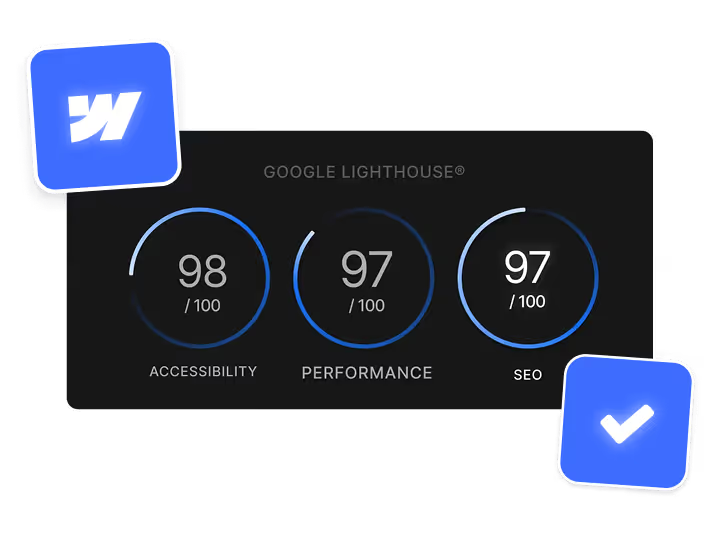
Google uses page speed as a ranking factor. Webflow's clean code and managed hosting deliver strong Core Web Vitals without the optimisation treadmill plugin-heavy platforms require.
.avif)
SEO built into the foundation
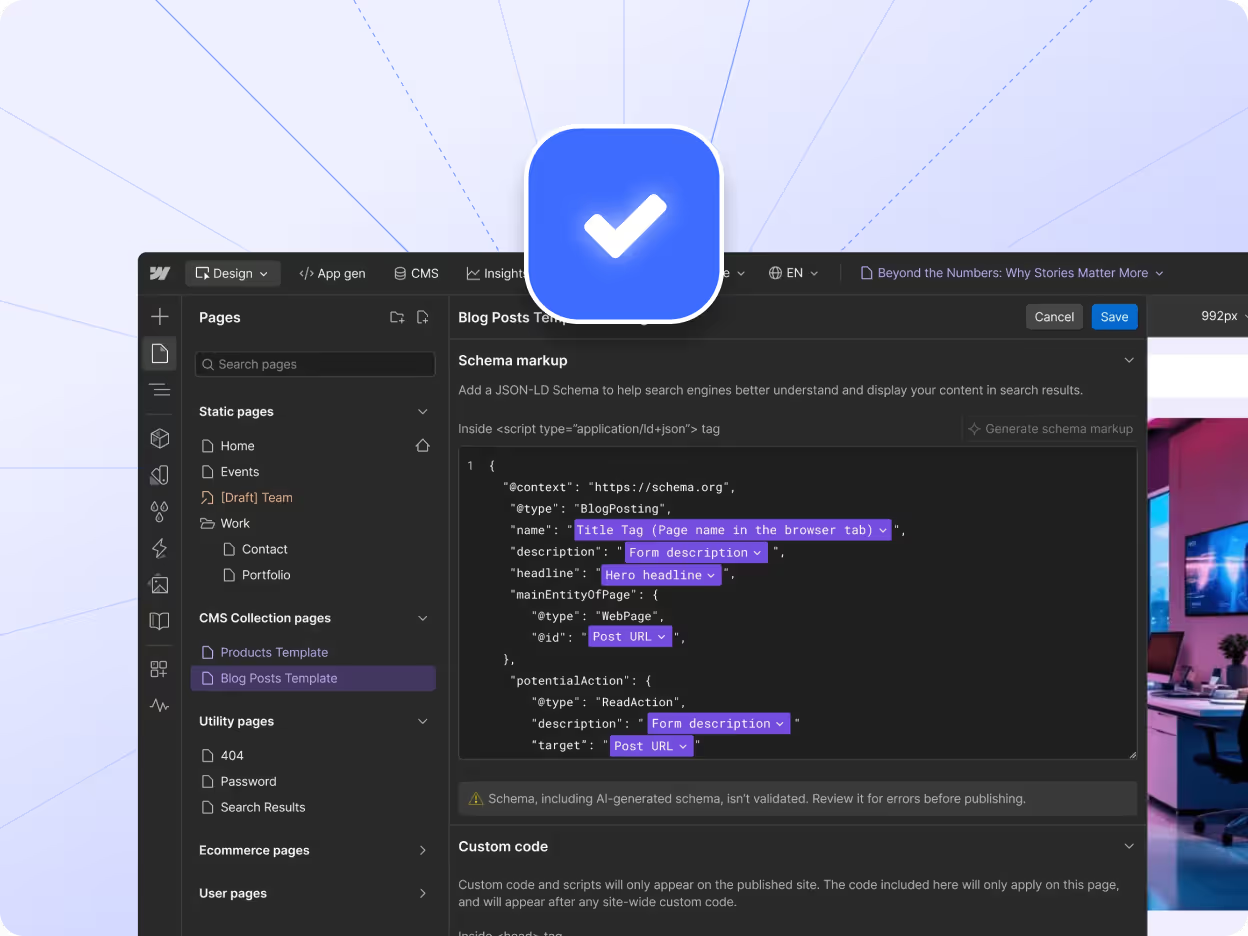
Clean markup, proper heading hierarchy, auto-generated sitemaps, and customisable meta data. On WordPress, you'd need three or four plugins to get the same setup.
.avif)
Launch landing pages in days, not sprints
When your paid media team needs a campaign page, Webflow lets you publish within your existing site. Same domain, same design system, same analytics. No developer ticket.
///
Webflow is the platform. Superpresence is the strategy behind it.
A platform alone doesn't generate leads. The design, messaging, and conversion architecture built on top of it does.
Every project starts in Figma, not Webflow. Your brand gets a fully custom visual identity first, without platform constraints shaping creative direction. Once the design is locked, we build it on Webflow with the same precision.
Bespoke design that starts in Figma and translates perfectly to Webflow
Conversion-focused page structure mapped to your buyer's journey
A CMS your team can manage, with training included
Ongoing support when you need it — retainers, training, or ad-hoc requests
Built for both organic growth and paid media performance
See how Superpresence builds on Webflow
COMMON QUESTIONS
Common questions about Webflow for B2B websites
![Portrait of a Kevin D Chen [Dark]](https://cdn.prod.website-files.com/6963b46b73d13c416619d604/696770db31b454394fd4709a_43e4f0a4b187c1f51dd5024dd9980a60_kevin-photo.avif)
Kevin D. Chen
Founder & CEO
Can't find your answer?
We’ve gathered the most popular ones here. And if you’d like to ask us anything more specific, we’re here to help.
Let’s talk growth
Or email us on kelvin@superpresence.co
We're on WordPress. How disruptive is the switch?

Can our non-technical team manage a Webflow site?
Is Webflow secure enough for B2B?
Will our SEO rankings drop if we migrate?
How does Webflow handle blogs, case studies, and resources?
What does ongoing support look like after launch?
Do you only work with Webflow? What if it's not the right fit for my project?
Can your web design agency handle complex technical products?

Your website should be one of
your strongest growth channels
A website growth strategy session covers your current setup, your goals, and whether Webflow is the right foundation for what comes next. No commitment, no pitch deck.